With the widespread use of portable electronics, power tools, electric vehicles, and energy storage systems, lithium-ion batteries have become a cornerstone of modern energy storage technology. Compared to traditional batteries, lithium-ion batteries offer high energy density, lightweight construction, and long cycle life, making them highly popular across various applications. However, no technology is perfect. Lithium-ion batterie’s also have certain drawbacks that should be considered. This article will explore the pros and cons of lithium-ion batteries and provide guidance for selecting the right battery solutions.
Advantages of Lithium-Ion Batteries
1. High Energy Density
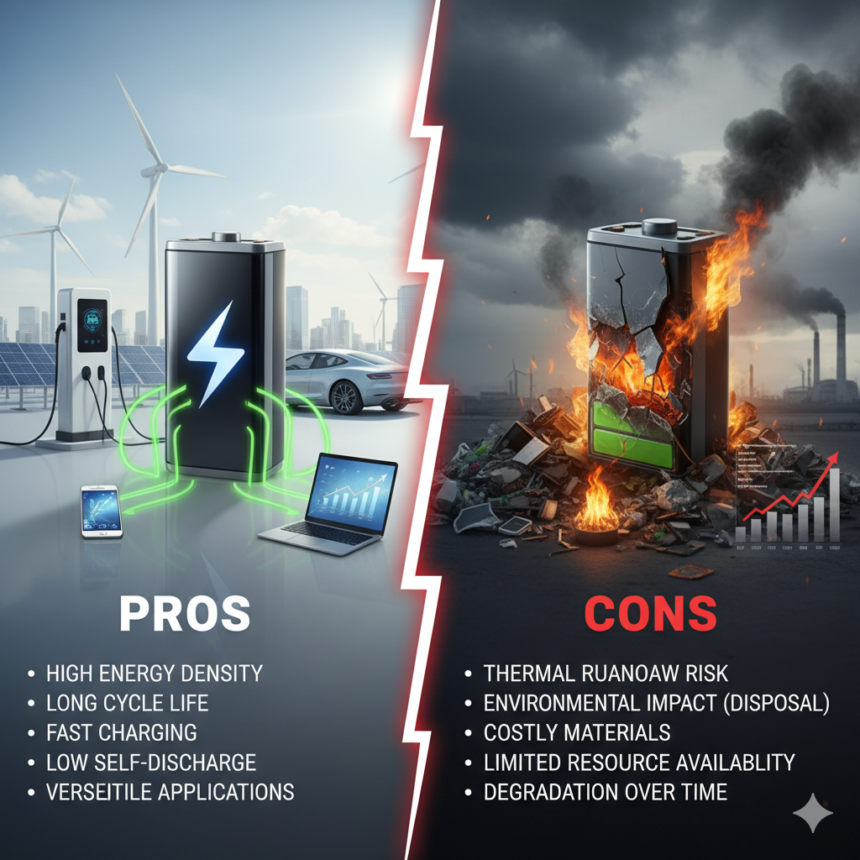
One of the most significant advantages of lithium-ion batterie’s is their high energy density. They can store more energy per unit weight or volume than traditional batteries like lead-acid or nickel-metal hydride. This makes them ideal for devices where size and weight are critical, such as smartphones, laptops, and portable power tools. Electric vehicles also benefit from longer ranges due to this high energy density.
2. No Memory Effect
Unlike some rechargeable batteries such as nickel-cadmium, lithium-ion batteries do not suffer from the “memory effect.” Users can recharge them at any time without fully discharging the battery, which prevents capacity loss over time. This greatly improves convenience for everyday use and prolongs the practical lifespan of the battery.
3. Low Self-Discharge Rate
Lithium-ion batterie’s have a low self-discharge rate, meaning they retain most of their charge during storage. This is particularly useful for applications that are not used frequently, such as emergency power supplies or backup battery systems, ensuring they are ready when needed.
4. Long Lifespan
Lithium-ion batterie’s typically offer hundreds to over a thousand charge-discharge cycles. With proper battery management systems (BMS) and reasonable usage, their lifespan can be significantly extended. This is one of the reasons many engineers and designers prefer lithium-ion solutions for both consumer electronics and industrial applications.
5. Versatility and Customization
Lithium-ion batteries can be tailored to meet different performance needs through chemical composition, structural design, and management systems. High-power applications can benefit from batteries designed for rapid discharge, while devices prioritizing long runtime can use high-capacity designs. Additionally, for specialized requirements, custom lithium ion battery pack solutions allow precise adjustments in size, capacity, and performance to match specific devices or systems.
Disadvantages of Lithium-Ion Batterie’s
1. Safety Risks
Lithium-ion batteries can pose safety risks if exposed to high temperatures, overcharging, overdischarging, or physical damage. Thermal runaway, fire, and even explosions are possible in extreme conditions. Proper BMS design is crucial to monitor voltage, current, and temperature, ensuring safe operation.
2. Sensitivity to Temperature
Lithium-ion batteries are sensitive to environmental temperature. Low temperatures can significantly reduce capacity, while high temperatures accelerate degradation and shorten overall lifespan. This presents challenges for extreme conditions, such as electric vehicles in cold climates or energy storage in hot regions.
3. Higher Cost
Although costs have decreased due to large-scale production and technological improvements, lithium-ion batterie’s remain more expensive per unit of energy compared to lead-acid batteries. Cost-sensitive applications, such as large-scale backup power or low-end devices, may be affected by this price difference.
4. Recycling Challenges and Environmental Concerns
Lithium-ion batteries contain valuable metals and hazardous chemicals. Improper disposal can cause environmental pollution. While recycling technologies exist, global collection and processing are not yet fully optimized, leading to potential resource waste and environmental risks.
Visit for more mobilecrc.com