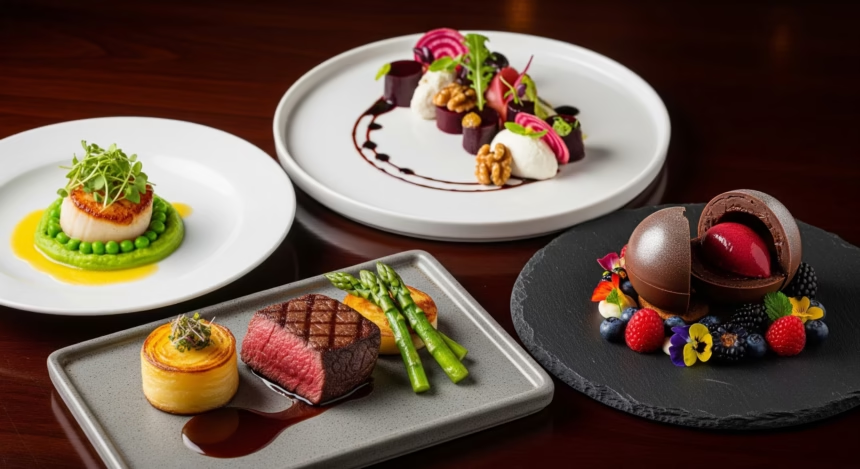
Food-based short breaks have revolutionised the way people travel in Britain. Instead of pursuing jam-packed schedules, most travellers are making weekends centred around one exceptional meal, letting taste dictate the tour. Beautiful scenery, considered menus, and a feeling of serenity all combine to make escapes seem luxurious without requiring long holidays.
- The Appeal of Culinary-Led Weekend Travel
- Countryside Retreats Built Around the Table
- Coastal Escapes Where Seafood Leads
- City Breaks with Destination Dining
- Wine Pairings and Thoughtful Drinks Lists
- Seasonal Menus That Reward Repeat Visits
- Planning a Seamless Culinary Weekend
- Why Food-Centred Escapes Continue to Grow
Around the country, hotels with fine dining restaurant options are increasingly influencing these experiences, which combine fine cuisine with cosy accommodations. Whether it is countryside escapes or coastal getaways, Britain has unlimited choices where food is the cause of carrying a suitcase, not just a thought after the holiday.
The Appeal of Culinary-Led Weekend Travel
Food-based getaways provide an alternative to traditional sightseeing. The journey is rhythmic because of meals, which encourage relaxing mornings and evenings spent enjoying well-cooked food. Each plate creates memories which last much longer than the final mouthful as it recounts a story of where, when, and artistry.
Travellers frequently find that a single reservation may completely change the course of a weekend. Planning is more about anticipation than schedules, so in between meals, the environment can be absorbed organically.
Countryside Retreats Built Around the Table
Rural Britain is a master at combining local produce-based cuisine with the scenery. Menus vary with the area because country homes and manor hotels sometimes collaborate with local farmers, fisheries, and foragers.
The hours before dinner are spent taking walks along forested pathways or through rolling fields. The evening service becomes the focal point, framed by calm views and thoughtful hospitality that feels personal rather than staged.
Coastal Escapes Where Seafood Leads
A different aspect of dining-led tourism is provided by seaside locations. Chefs are frequently inspired by a fresh catch to create dishes that mirror the weather and tides. Here, simplicity is important because it lets the ingredients speak without needless embellishment.
Walking along the cliffside or observing the harbour during the day may be followed by evenings when fish arrive at the table hours after they land. Place and plate become inextricably linked.
City Breaks with Destination Dining
Culinary weekends have a different vibe in urban environments. Cities like Manchester, Edinburgh, and London encourage cooks who push the envelope while staying true to their craft. Restaurants frequently occupy modern or historic structures that enhance the dining experience.
Galleries, theatres, or leisurely walks across the neighbourhood offer a contrast between meals. An otherwise fluid timetable is therefore given structure by dining, which serves as the anchor.
Wine Pairings and Thoughtful Drinks Lists
Seldom does a memorable meal exist apart from the glass next to it. Many upscale dining establishments make significant investments in carefully chosen wine selections, handcrafted spirits, or alcohol-free pairings that go well with each dish.
Guests are guided through options by knowledgeable staff without feeling overburdened. This conversation deepens the experience and transforms supper from a staged performance into a group exploration.
Seasonal Menus That Reward Repeat Visits
Seasonality is a major factor that determines the attraction of these getaways. Menus vary all year round, encouraging repeat visits that are entirely different. Autumn is characterised by more flavours and richer textures, whereas spring can offer lighter sauces and tender greens.
The idea that each visit captures a unique moment rather than a set offering is reinforced by this diversity, which keeps encounters novel.
Visit for more mobilecrc.com
Planning a Seamless Culinary Weekend
Fine dining trips should be planned carefully. Advance reservations of restaurants before lodging are useful in ensuring that there is availability, especially when there are highly sought-after chefs. The journey itself may be relaxed instead of rushed when the travel time is considered.
There should be space between meals. A properly planned schedule ensures that anticipation is generated naturally so that the meals are independent of each other and do not get repetitive.
Why Food-Centred Escapes Continue to Grow
The reason why culinary weekends work is that they are all about pleasure without overindulgence. Travellers are no longer checking attractions off the lists, but are looking at quality, craft and atmosphere. The variety of regions in Britain can serve this strategy better, providing richness in a small distance.
With the increasing popularity of meaningful breaks that not only sustain the body but also the mind, fine dining escapes around the UK have been thriving, and this shows that a great meal can be reason enough to travel.